

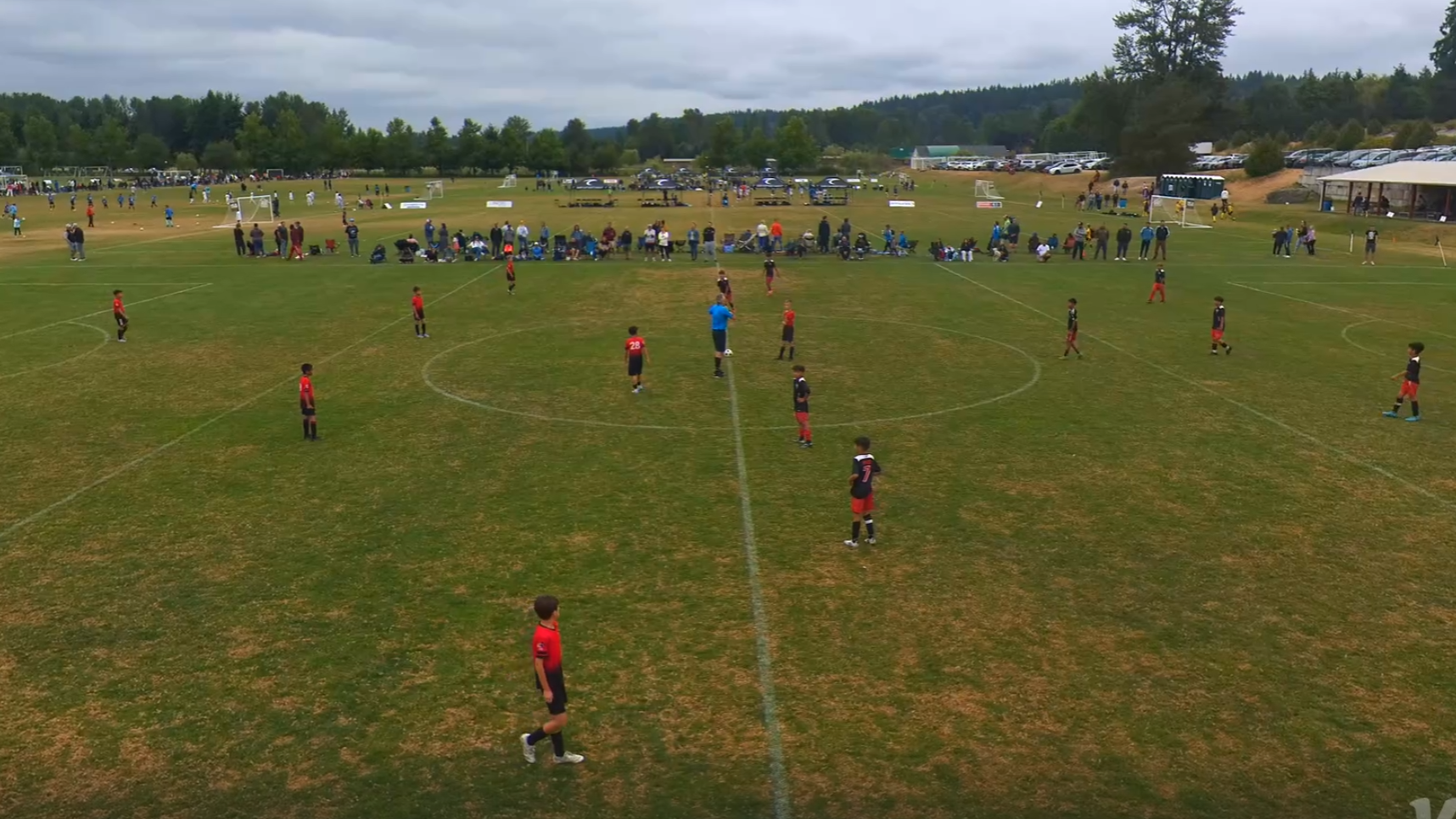
In the ever-evolving world of youth soccer, where the pressure to win often clashes with the need to develop well-rounded players, one rule has sparked both praise and debate: the retreat line. Introduced to foster a more thoughtful, possession-oriented style of play, this grassroots innovation is transforming how kids learn the game. But as with any change, it comes with its share of benefits and drawbacks. Drawing from studies and insights from soccer’s elite minds, this article explores how the retreat line is shaping youth development, particularly in preparing players for the demands of modern soccer. We’ll also take a closer look at its implementation in Canada, zooming in on vibrant youth scenes in Metro Vancouver hubs like Burnaby, New Westminster, Coquitlam, Vancouver, Port Coquitlam (PoCo), and Port Moody. After all, soccer isn’t just about tactics—it’s about kids discovering joy on the pitch while building skills that last a lifetime.
What Is the Retreat Line?
At its core, the retreat line, also called a build-up line, is a simple yet ingenious rule designed to give young players breathing room during restarts. When a goalkeeper gains possession or a goal kick is taken, opposing players must drop back behind a designated line—typically one-third or halfway across the field—until the ball is played forward by a teammate or crosses that line. This mechanic, championed by organizations like Canada Soccer and the Ontario Soccer Association, aims to discourage the chaotic “kick and rush” mentality that often dominates youth games.
Moreover, as outlined in Canada Soccer’s Grassroots Standards, the retreat line aligns with Long-Term Player Development (LTPD) models, emphasizing technical proficiency over brute force. It’s not about making the game easier; rather, it’s about creating opportunities for kids to think, pass, and build attacks without immediate pressure. In essence, it mirrors the patient, build-from-the-back philosophy seen in top-tier professional soccer today.
Benefits: Building Confidence and Skills from the Ground Up
The retreat line’s greatest strength lies in its ability to accelerate youth development by reducing fear and encouraging creativity. For instance, studies on constraints-led approaches in soccer training, such as those published in the Journal of Sports Sciences, show that rules limiting pressure during possession phases enhance decision-making and technical skills among young players. By giving defenders and goalkeepers time to control the ball and scan options, kids learn to value possession, leading to improved passing accuracy and spatial awareness.
Furthermore, this rule boosts confidence, especially for less experienced players who might otherwise shy away from risks. As noted in BC Soccer’s guidelines, it helps teams adopt a more tactical mindset, fostering teamwork and reducing reliance on long balls. In a study examining free play versus rule-imposed scenarios, researchers found that such constraints promote individual tactical behaviors, like better positioning and quicker transitions, which are crucial for long-term growth.
In addition, the build-up line addresses common pitfalls in youth soccer, such as high turnover rates that frustrate young athletes. Instead of constant scrambles, players experience success in building attacks, which keeps them engaged and motivated. As one grassroots coach might put it, it’s like giving kids a safety net while they learn to fly—ultimately preparing them for the high-pressing intensity of older age groups.
Drawbacks: Navigating the Potential Pitfalls
However, no rule is without its critics, and the retreat line has faced scrutiny for potentially delaying certain aspects of development. One key drawback is that it might shelter players from real-game pressure too long, making the transition to full-field soccer jarring. For example, in environments where the rule extends into older divisions, kids could develop habits of slow play that don’t hold up against aggressive opponents in competitive matches.
Moreover, some argue it slows the pace of games, leading to less excitement and fewer goal-scoring opportunities. A report from East Side Soccer highlights how, without proper coaching, teams might still revert to “kick and rush” tactics once the line is crossed, undermining the rule’s intent. There’s also the risk of uneven enforcement; referees or coaches who misunderstand the rule can create confusion, frustrating parents and players alike.
That said, these drawbacks are often mitigated through balanced implementation. As with any tool, the retreat line’s effectiveness depends on coaches who use it to teach, not just comply—ensuring kids gradually face increasing challenges as they mature.
Preparing Young Players for Modern Soccer
Transitioning to the bigger picture, the retreat line is a bridge to the demands of contemporary soccer, where possession and build-up play reign supreme. In today’s game, dominated by teams like Manchester City or Barcelona, players must be comfortable on the ball under pressure from an early age. The retreat line instills these habits by encouraging short passes and patient progression, aligning perfectly with LTPD principles promoted by Canada Soccer.
In fact, as players advance, this foundation translates to better adaptability in high-stakes scenarios. Studies on skill development emphasize that early exposure to controlled possession environments leads to superior performance in adolescence and beyond. It’s no coincidence that nations like Spain and Germany, with similar youth rules, produce technically gifted stars. By humanizing the learning process—allowing mistakes without immediate punishment—the retreat line helps kids fall in love with the game’s artistry, turning them into thinkers on the field rather than mere reactors.
The Canadian Context: Spotlight on Metro Vancouver’s Youth Soccer Scene
Here in Canada, the retreat line is woven into the fabric of youth soccer, varying by league and region to suit developmental needs. In British Columbia, for instance, the BC Coastal Soccer League (BCCSL) extends the retreat line all the way up to U14, providing a prolonged emphasis on skill-building in club settings. This contrasts with the Academy Super League (ASL), a high-performance development circuit, which limits the rule to just the U9 division, pushing older academy players toward more intense, pressure-filled play earlier on.
Zooming in on Metro Vancouver, areas like Burnaby, New Westminster, Coquitlam, Vancouver, PoCo, and Port Moody are hotbeds for youth soccer, blending recreational fun with pathways to elite levels. In Burnaby, clubs like SEFA Soccer Academy offer year-round programs that incorporate the retreat line to nurture skills in diverse communities, often indoors during rainy winters. Nearby in Coquitlam, the Metro-Ford Soccer Club serves over 4,500 kids, using BCCSL rules to emphasize LTPD in a supportive environment. Port Moody Soccer Club stands out for its inclusive U8-U10 programs, where the retreat line helps even beginners feel like part of the team.
In Vancouver and New Westminster, urban fields buzz with multicultural squads, while PoCo’s volunteer-driven teams highlight community spirit. These locales benefit from BC Soccer’s structured approach, where the retreat line isn’t just a rule—it’s a tool for inclusivity, helping kids from all backgrounds develop poise and passion. Parents in these areas often share stories of their little ones beaming after a successful build-out, proving that soccer here is as much about personal growth as it is about the game.
Voices from the Pitch: Wisdom from Soccer’s Greats
To truly appreciate the retreat line’s impact, let’s hear from those who’ve shaped the sport. Legendary coach Arsène Wenger once emphasized, “Young players need freedom of expression to develop as creative players. They should be encouraged to try skills without fear of failure.” This sentiment echoes the rule’s purpose, giving kids that very freedom.
Similarly, Pep Guardiola, the mastermind behind possession-dominant teams, has advocated for building from the back: “The goalkeeper is the first attacker.” His philosophy aligns seamlessly with the retreat line, which teaches young keepers to distribute intelligently rather than boot the ball aimlessly.
On the player side, Lionel Messi reflected on his youth days: “I learned to play with joy, without pressure.” While not directly about the rule, it underscores how reducing early stress—like through retreat lines—fosters the creativity that defines greats like him.
Even Jurgen Klopp, known for high-pressing, acknowledges the need for foundational skills: “You have to build the base before you press.” In youth contexts, this means rules like the retreat line lay the groundwork for his gegenpressing style later on.
These insights remind us that soccer’s icons didn’t emerge in a vacuum—they thrived in environments that prioritized development over immediate results.
Conclusion: A Step Back for a Leap Forward
In summary, the retreat line represents a thoughtful step back in youth soccer, one that propels players forward in their development. While its benefits in building confidence, skills, and tactical acumen far outweigh the drawbacks, success hinges on smart coaching and gradual progression. As Canada continues to refine its approach—evident in leagues like BCCSL and ASL, and thriving scenes in Metro Vancouver—youngsters in places like Burnaby and Port Moody are reaping the rewards. Ultimately, by humanizing the game and aligning it with modern demands, the retreat line isn’t just changing rules; it’s crafting the next generation of soccer stars, one patient pass at a time.