

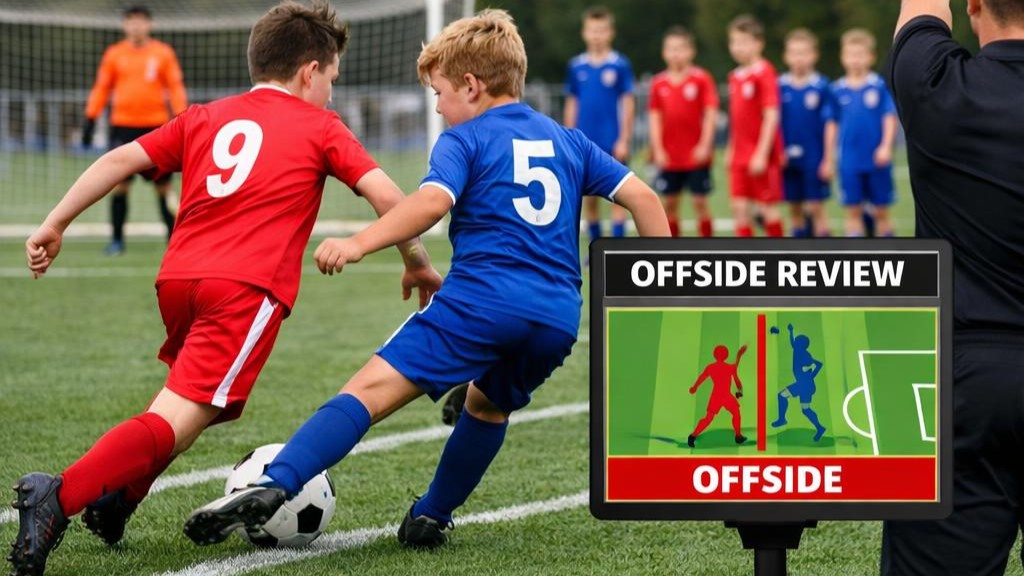
How Recent Changes Are Shaping Youth Soccer
In the fast-paced world of soccer, where split-second decisions can turn a game on its head, the offside rule has long been a source of heated debates and nail-biting moments. However, as we kick off 2026, exciting developments from FIFA and the International Football Association Board (IFAB) are poised to redefine this fundamental aspect of the game. For young players honing their skills at academies like SEFA Soccer Academy in Burnaby, New Westminster, Coquitlam, Vancouver, Port Moody, and Port Coquitlam, these shifts aren’t just technical tweaks—they’re opportunities to foster creativity, build confidence, and make the sport more accessible. Let’s dive into the details, exploring how these changes came about, what they entail, and why they matter for the next generation of soccer stars.
Current offside rule
First and foremost, recall the traditional offside rule: A player is offside if any part of their body (that can legally play the ball) is closer to the opponent’s goal line than both the ball and the second-last opponent at the moment the ball is played. This has been the cornerstone since the rule’s major refinements in the 1990s, but it’s often led to frustration over “marginal” calls—think a toe or shoulder tipping the scales. Nevertheless, recent innovations aim to address these pain points, starting with the widespread adoption of Semi-Automated Offside Technology (SAOT).
Introduced progressively from 2022 and fully rolling out in major leagues by 2025, SAOT uses AI-driven cameras to track players’ positions in real-time, generating 3D models for quicker, more accurate decisions. For instance, in the Premier League, it was implemented mid-2024-25 season, slashing review times from minutes to seconds. According to reports from ESPN, this tech made its FA Cup debut in early 2025, proving its reliability in high-stakes matches . Moreover, FIFA deployed an advanced version during the 2025 Club World Cup, as detailed on their official site, setting new standards for fairness . But why does this matter for kids? Imagine a 10-year-old at SEFA Soccer Academy, puzzled by why their goal was disallowed in a weekend scrimmage. With SAOT trickling down to youth tournaments—already tested in select U-17 events—these young athletes can learn from precise replays, turning confusing calls into teachable moments that emphasize positioning over luck.
Wenger Law
Transitioning to an even bolder proposal, the so-called “Wenger Law” has been generating buzz since Arsène Wenger, FIFA’s Chief of Global Football Development, championed it in 2023. Essentially, this rule flips the script: An attacker would only be flagged offside if their entire body is ahead of the last defender, allowing for overlaps where any part of the body keeps them onside. As explained in a comprehensive breakdown by Ertheo Education & Sports, this shift draws from over 160 years of offside evolution, aiming to eliminate those razor-thin controversies that plague VAR reviews . Furthermore, FIFA President Gianni Infantino hinted at its potential adoption during a 2025 summit in Dubai, noting it could make the game “more attacking and attractive” while maintaining balance, per beIN SPORTS coverage .
Trials for the Wenger Law kicked off in lower-tier leagues in Italy, Sweden, and the Netherlands as early as 2023-24, with IFAB reviewing data at their February 2025 meeting. Although full global implementation might still be in testing phases as of early 2026, early results suggest a surge in goals—potentially boosting averages from 2.5-3 per match to 3.5-4, according to expert analyses . On the flip side, defenders may need to adapt by dropping deeper, which could open up midfield battles and encourage more dynamic play. For youth soccer, this is a game-changer. At SEFA Soccer Academy, where we train budding talents across Greater Vancouver, coaches often see kids hesitate on runs due to offside fears. With the Wenger Law, however, that hesitation could vanish; young forwards might feel empowered to push boundaries, knowing a slight overlap keeps them legal. Picture little Mia from Port Coquitlam, darting forward with newfound boldness—her coach cheering not just the attempt, but the lesson in risk-taking that mirrors real-life resilience.
“It Felt Unfair”
Take another heartfelt story from Burnaby’s Ethan, an 11-year-old midfielder who’s battled shyness on the field. Last year, an offside whistle halted his breakout run, leaving him deflated on the bench. “It felt unfair, like I couldn’t even try,” he says, mimicking his dejected slump. But with the impending Wenger adjustments, Ethan’s now drilling timing drills, visualizing himself as a mini-Messi, weaving through defenses with confidence. These narratives aren’t isolated; across our Greater Vancouver hubs, parents echo similar sentiments—like the mom who, after years of sideline confusion, finally “gets” offside thanks to clearer tech explanations, turning her into the team’s biggest cheerleader.
Cons and Prones
Yet, these changes aren’t without their critics. Some argue that altering offside could disrupt tactical traditions, making defenses more vulnerable and potentially leading to lopsided scores in amateur games. Additionally, as World Soccer Talk points out, Infantino’s vision includes broader rule tweaks to evolve the sport ahead of the 2026 World Cup, but extensive testing is key to avoiding unintended chaos . In youth contexts, this means academies like ours must stay proactive. We’re already incorporating SAOT-inspired drills, using apps and simple markers to simulate tech-assisted rulings, helping kids grasp concepts without the pressure of pro-level scrutiny.
In conclusion, as soccer continues to innovate, these offside updates—from SAOT’s precision to the Wenger Law’s attacker-friendly approach—promise a brighter, more engaging future for the beautiful game. For the young players at SEFA Soccer Academy, scattered across Burnaby to Port Coquitlam, it’s about more than rules; it’s about igniting passion and building skills that last a lifetime. Whether you’re a parent scouting programs or a kid dreaming of the pitch, staying informed keeps everyone in the game. For more on FIFA’s ongoing trials, check out the official IFAB law changes page or Wenger’s insights via FIFA’s development resources. Let’s keep the conversation going—what do you think these changes mean for youth soccer? Drop us a line at sefasoccer.com!