

How a Burnaby Club Built One of Canada’s Most Productive Youth Soccer Development Pipelines
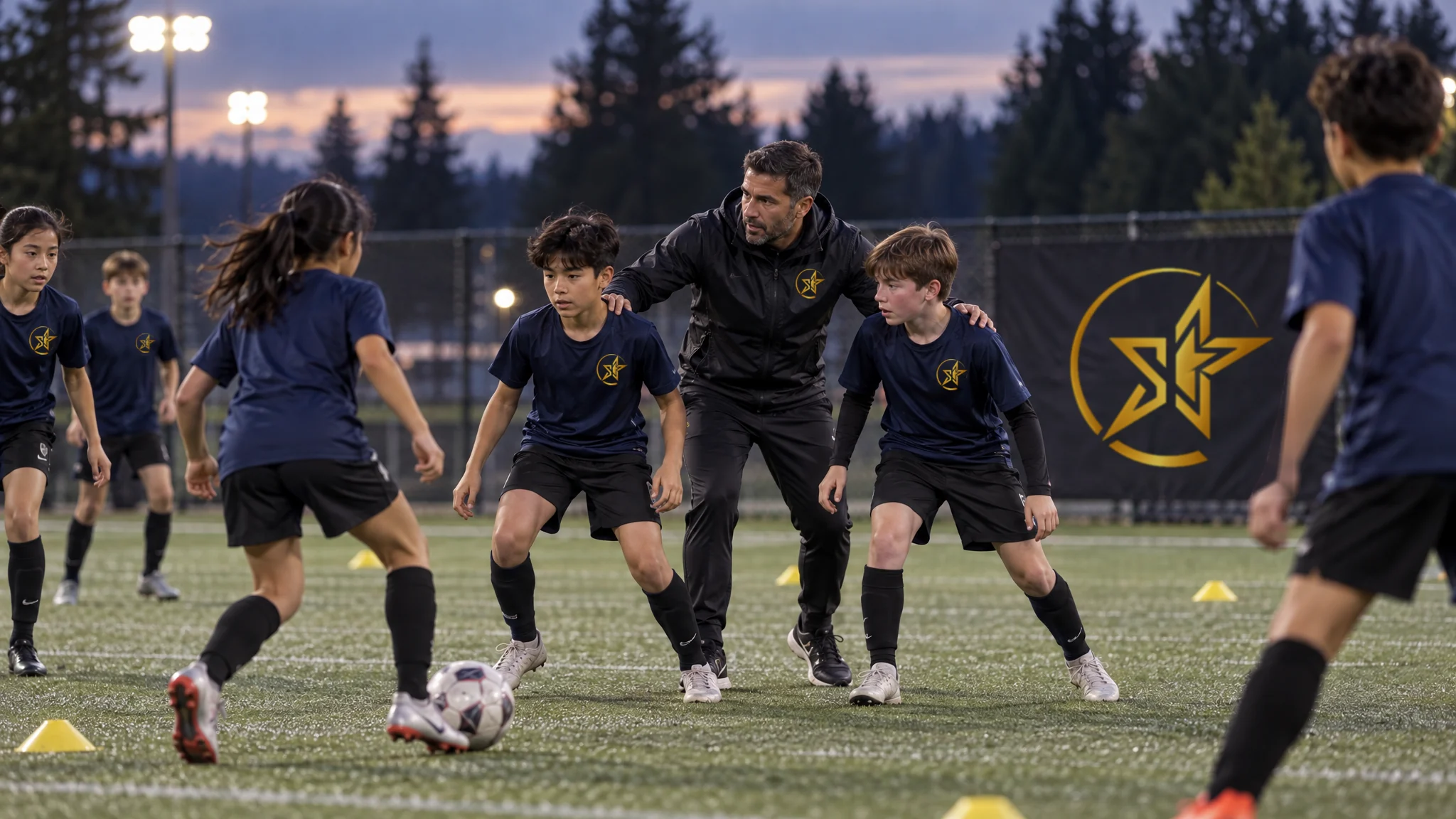
An in-depth look at one of Metro Vancouver’s leading youth soccer academies — covering player development, training philosophy, competitive programs, alumni pathways, and how to register. Written for parents searching for youth soccer programs, kids soccer clubs, and competitive soccer academies in Burnaby, New Westminster, Coquitlam, and surrounding communities.
Quick Facts — SEFA Soccer Academy:
Founded: 2013, Burnaby, British Columbia
Ages: 5–18 (Mini Stars through Elite U16–U18)
Training locations: Burnaby, New Westminster, Coquitlam
League: Academy Super League (ASL), BC Soccer Academies Association (BCSAA) member since 2017
Programs: Year-round training, goalkeeper sessions, competitive ASL games, international tournaments
Notable alumni: Whitecaps FC 2 professional signings, Canada U17 national team players, 2026 FIFA U-17 World Cup representative, Colorado Rapids MLS NEXT, Le Havre Academy (France)
Contact: sefasoccer.com | +1 778-881-1603 | sefasoccermanager@gmail.com
On a weekday evening at Burnaby Lake Sports Complex, a group of twelve-year-olds are running a possession drill. The coach stops play, repositions two defenders, and restarts — not to run the clock down, but because the shape was wrong. Nobody complains. They reset and go again.
It’s an unremarkable scene in the grand theatre of soccer — except that it plays out like this every week, across six training locations in three cities, with players ranging from five-year-olds discovering the ball to seventeen-year-olds preparing for professional contracts. That consistency — that insistence on doing things properly at every level, with every age group — is what has quietly made SEFA Soccer Academy one of the most respected youth soccer development programs in British Columbia.
Founded in 2013 in Burnaby, SEFA has grown from a local training operation into an institution with a verifiable track record: players sent to Whitecaps FC 2, the Canadian and Nigerian national youth teams, European academies in France, and most recently, the 2026 FIFA U-17 World Cup. It trains players aged 5 to 18 across Burnaby, New Westminster, Port Moody Surrey and Coquitlam, competes in the Academy Super League (ASL), and has built alumni pathways that stretch from Colorado to Qatar, from Normandy to Nyon, Switzerland.
How did a community soccer academy in Burnaby produce players at that level? The answer lies less in infrastructure and more in philosophy — and in a decade-long commitment to applying that philosophy consistently even when easier paths were available.
What Is SEFA Soccer Academy? Philosophy and Mission
SEFA’s founding premise is straightforward, if not universally practiced: soccer, played and coached well, makes people better at life. Not just better athletes — better people. Whether a young player eventually signs a professional contract or simply plays recreational soccer into middle age, the discipline, competitive thinking, and teamwork built on the training pitch carry weight far beyond any scoreline.
That belief shapes every operational decision the academy makes. SEFA doesn’t sell programs in the conventional sense. There are no fixed seasonal packages, no one-size-fits-all curricula. Instead, the academy runs year-round, continuous youth soccer training built around the developmental realities of each age group — and within that, the individual needs of each player.
The sequencing of what gets taught and when is where SEFA’s approach becomes most interesting.
For the youngest age groups, the explicit goal is not technical excellence. It is enjoyment. Coaches working with six, seven, and eight-year-olds are not chasing flawless first touches. They are building something harder to manufacture and more important to sustain: a genuine love for the game. The reasoning is pragmatic. A fifteen-year-old who loves soccer will push through difficulty on their own terms. One who was drilled into competence but never fell in love with the sport often won’t. The coaches at SEFA have watched both trajectories play out enough times to be certain which one produces better players over the long term.
That deliberate sequencing — enjoyment first, technical mastery second, tactical sophistication third, full-system integration last — is not a compromise. It is a structured approach to long-term player development that the academy’s results consistently support.
SEFA Soccer Programs: Age-by-Age Development in Burnaby, New Westminster, and Coquitlam
Walk through each age group and the progression becomes concrete.
Mini Stars — Age 5: Introduction to Soccer
Five-year-olds at SEFA are being introduced to a ball, to movement, to space, and to the social experience of playing with other kids. Coaches at this level function as facilitators as much as instructors — creating environments where discovery happens naturally. The soccer fundamentals embedded in these sessions are real, but they arrive through play rather than formal instruction.
U6–U8 Kids Soccer Program: Building the Foundation
By age six, children are ready for more structure — though not much more. The Fundamentals program for this age group uses competitive games and creative drills to introduce dribbling, passing, shooting, and basic spatial awareness. The approach draws on what this age group naturally brings: energy, genuine competitiveness, and a complete absence of self-consciousness about making mistakes. Those are ideal learning conditions, and SEFA coaches build directly within them.
U9–U11 Youth Soccer Training: Technical Development
This is the stage where individual technical ability starts to matter significantly, and where SEFA invests most deliberately. The U9–U11 program emphasizes ball control, dribbling mechanics, passing accuracy, and shooting — crucially, in context rather than isolation. Opposed drills — exercises that incorporate real defensive pressure — are central to this age group’s training. Players don’t just repeat skills; they learn to execute them when something is at stake. That is a meaningfully different kind of learning than unopposed repetition.
Teams train twice per week and compete in ASL league games on Sundays. Training locations: Burnaby, New Westminster, Coquitlam.
U12–U13 Soccer Program: Game Intelligence
Around age twelve, something changes in how young players process the game. Spatial reasoning matures. Pattern recognition improves. The field starts to make sense in ways it didn’t two years earlier. SEFA’s U12–U13 program is built to meet players at exactly that developmental moment, introducing game awareness, positional understanding, and decision-making under pressure as explicit training objectives alongside continued technical development.
Coaches at this level emphasize competitive courage — the willingness to apply what has been practiced in training to the messier, higher-stakes environment of a real match. It is a harder skill to teach than most assume.
Two sessions per week, ASL games on Sundays.
U14–U15 Competitive Youth Soccer: Full Integration
By fourteen, all four training pillars operate simultaneously at full intensity. The U14–U15 program features high-volume, high-intensity sessions with structured recovery built in — because players at this age are in peak growth windows, and the physiological opportunities those create for developing speed, power, and explosiveness are both valuable and time-limited.
Tactically, training moves into phases of the game, combinational play, set-piece work, and advanced positioning. One notable practice at this level: post-game video analysis, where coaches and players review match footage together — working through successes and errors with the same rigor a professional setup would apply.
Two sessions per week, ASL games Saturday evenings or Sundays.
U16–U18 Elite Soccer Academy: The Pathway Forward
The oldest players in the SEFA system enter the Elite Program — training built explicitly around the demands of professional youth soccer. Strength and conditioning share the schedule equally with technical and tactical work. The coaching staff, all of whom hold professional certifications ranging from Level C to UEFA B licenses, are preparing players for whatever comes next: BCSPL clubs, the Whitecaps FC Academy system, provincial team selection, US or Canadian college soccer, or professional contracts.
There are no volunteer coaches at SEFA. Every coach on staff has invested in their own professional education with the same seriousness they bring to player development.
The Four Pillars of SEFA’s Youth Soccer Training
Across every age group, SEFA’s training methodology is built on four developmental pillars that evolve in emphasis as players mature.
Technical — Ball mastery, receiving, passing, dribbling, feinting, finishing. At SEFA, technical quality is the non-negotiable foundation. Tactical sophistication has to be built on top of it; it cannot substitute for it.
Tactical — Reading the game, recognizing patterns, adapting to formations, executing decisions under pressure. Tactical training intensifies from age thirteen onward, but its foundational habits begin at age six.
Physical — Coordination, agility, and running mechanics at younger levels; speed endurance, strength, and explosive power at the older age groups. The physical demands placed on a twelve-year-old and a seventeen-year-old are categorically different, and SEFA coaches periodize accordingly.
Psychological — The mental dimension of the game, treated as a full coaching discipline. For younger players, this means building confidence and positive relationships with competition. For older players, it means developing the analytical composure and resilience required to perform at elite levels when things are not going well.
SEFA Training Locations in Metro Vancouver
SEFA operates across a network of venues in three cities, making it accessible to families across a wide swath of Metro Vancouver. The academy’s primary training facilities include:
- Burnaby Lake Sports Complex — a multi-field complex that also houses the Whitecaps FC Pre-Residency program
- Cariboo Oval Track and Soccer Field, Burnaby — home of the weekly Goalkeeper Training Program, held every Friday at 7 PM, open to all ages and skill levels
- Queen’s Park, New Westminster
- Mercer Stadium, New Westminster
- Coquitlam Town Centre Fields — central for families from Port Coquitlam, Port Moody, Maple Ridge, and Pitt Meadows
- Charles Best Secondary Turf, Coquitlam
All sites offer both artificial turf and grass surfaces. Training runs year-round regardless of weather — families from Burnaby, New Westminster, Coquitlam, Vancouver, Surrey, Port Moody, and Port Coquitlam are typically within a 15–25 minute drive of at least one training location.
ASL Games and Competitive Soccer for Kids in Metro Vancouver
SEFA has been a member of the BC Soccer Academies Association (BCSAA) since 2017 and competes across multiple age divisions in the Academy Super League (ASL) — the premier youth soccer competition in British Columbia. ASL games run on weekends at venues across Metro Vancouver: Burnaby, Vancouver, New Westminster, Coquitlam, Surrey, Langley, and Richmond.
Beyond the ASL, SEFA participates in some of the most competitive youth soccer tournaments in North America:
- PacNW Winter Classic — SEFA’s 012 and 013 teams won back-to-back championships in 2023 and 2024; the 011 Selects also won; the 014 team reached the final
- Surf Cup Northwest — In 2024, the 014 and U13 teams were champions; 012 reached the final; 011 advanced to semifinals
- Las Vegas Mayors Cup
- Crossfire (Washington State) — 2019 finalist
- West Coast Classics
Tournament competition creates high-stakes match environments that training sessions, however well-designed, cannot fully replicate. SEFA teams are consistently competitive in those environments across multiple age groups.
Young SEFA Players Competing in Men’s Soccer: The VMSL and Fraser Valley Soccer Leagues
One of the more distinctive aspects of SEFA’s development philosophy — and one that separates it from most youth soccer programs in British Columbia — is its willingness to advance technically and physically mature young players into adult men’s soccer competition, sometimes as young as fifteen years old.
The Vancouver Metro Soccer League (VMSL), the largest amateur men’s soccer league in Western Canada with over 170 teams and 5,000 registered players, and the Fraser Valley Soccer League represent a form of competitive challenge that the youth game simply cannot replicate. The pace is faster. The physicality is real. The tactical demands are adult in every sense. And for a player whose foundation is genuinely solid — whose technical quality can handle the transition and whose physical development supports it — that environment is the most honest test available.
SEFA doesn’t use the men’s leagues as a novelty or a marketing talking point. The decision to move a player into that environment is a coaching judgment call, made on a case-by-case basis, based on whether the player is ready to benefit from the exposure rather than just survive it.
Players like Ali Haji, Jericho Bond, and Tyler Magdalinksy represent the profile of young SEFA athletes who have made exactly that transition — competing credibly against grown men in organized amateur football leagues, earning their place on the pitch not because of their age but in spite of it.
The underlying philosophy is consistent with everything SEFA does across its age groups: give players the level of challenge they are ready for, not the level that is comfortable for them. Youth soccer has developmental ceilings. When a player is ready to break through one, the right move is to help them do it.
SEFA Alumni: A Development Pipeline With Real Results
The most direct measure of any youth soccer academy is what happens to the players who pass through it. At SEFA, that measure has produced, over the past several years, an alumni record that is genuinely remarkable for a community-based program.
The academy holds the highest rate of graduates entering the Whitecaps FC Academy program of any club in the Metro Vancouver area. But the pipeline extends well beyond the Whitecaps — to professional contracts, MLS All-Star recognitions, national team appearances across multiple countries, and, most recently, a place at the FIFA U-17 World Cup.
These are the stories behind those outcomes.
Yuma Tsuji — The Kid Who Started at Eight and Signed a Professional Contract at Seventeen
Yuma Tsuji joined SEFA at age eight. He was not yet a specialized player — moving between left-back and striker, still finding his position in the game. What SEFA coaches identified in him was not a position but a profile: genuine technical quality, competitive instinct, and an ability to process the game at a pace above his age group.
He developed through SEFA’s program over several years before joining the Whitecaps FC BMO Academy in 2022. By 2023, Whitecaps coaches were publicly designating him the best U15 player in their entire academy system.
On November 3, 2025, Vancouver Whitecaps FC announced that Yuma Tsuji had signed a professional contract with Whitecaps FC 2 — the 16th Canadian teenager to turn professional with WFC2 since the team entered MLS NEXT Pro in 2022. Over the 2025 season, he made 21 appearances, started 17 matches, and logged 1,577 minutes of professional football — numbers well above his age bracket. He was simultaneously selected to represent Canada at the 2025 FIFA U-17 World Cup in Qatar.
Born June 9, 2008. First SEFA session: age eight. Professional contract: age seventeen.
Sahil Deo — Historic MLS NEXT All-Star, Professional Contract, Canada U17
Sahil Deo was born April 7, 2008 in New Westminster and grew up in Port Coquitlam — both within SEFA’s training geography. As a center back, his value was the kind that doesn’t always translate to highlight reels: positional discipline, composure under pressure, and an ability to organize the players around him.
After time with Langley United in the BCSPL and then the Whitecaps FC Pre-Academy, Deo joined the BMO Academy in 2022. During the 2024–25 season, he started 24 matches for the Whitecaps U-18 squad, recording three goals and four assists.
In July 2025, he was named to the 2025 MLS NEXT All-Star Game Western Conference Roster — one of 44 players selected across North America. In doing so, he became the first player of Fijian descent ever selected to the MLS NEXT All-Star Game. He was simultaneously part of the Canadian program that qualified for the 2025 FIFA U-17 World Cup in Qatar, representing Canada across U15, U17, and U20 levels.
On January 14, 2026, Deo signed a professional contract with Whitecaps FC 2, running through 2027.
Tyler Brown — 33 Goals, Historic MLS NEXT MVP, Professional Debut at Swangard
Tyler Brown, born March 4, 2009, came through Langley United and SEFA before joining the Whitecaps Pre-Academy in 2022. As a forward, he combined pace with the kind of intelligent movement that defenders routinely failed to account for.
During the 2024–25 season, Brown scored 33 goals across the Whitecaps U-16 and U-18 squads and was named MLS NEXT U-16 MVP — becoming the first player from a Canadian club to win that award in a competition spanning the United States and Canada. He was named MLS NEXT Player of the Month in February 2025.
In July 2025, Brown was selected alongside Sahil Deo to represent the Western Conference at the 2025 MLS NEXT All-Star Game in Austin, Texas. On September 1, 2025, he made his professional debut for Whitecaps FC 2 in a 4–1 home victory against Timbers2 at Swangard Stadium in Burnaby. He has since been called up to the Canada U-17 National Team.
Kunle Tokode — From SEFA to the 2026 FIFA U-17 World Cup
Kunle Tokode joined SEFA at age ten — a forward with an explosive first step and 1v1 dribbling ability rare for his age in this part of the world. He moved from SEFA through Langley United and into the Whitecaps FC Academy in 2022. By 2025, he had been named Player’s Player of the Year for the Whitecaps U-16 MLS Academy and listed as an MLS NEXT Player to Watch.
His path then took a direction that few players from British Columbia have ever navigated. Tokode moved to the Al-Sadd Academy in Qatar — one of the world’s most resource-intensive youth development environments. His international profile had already drawn interest from Nigeria’s U15 and U17 programs, where he featured in camps and matches through the FIFA Talent Development Scheme.
Then came the announcement: Tokode has been named to the Qatar U17 National Team and will represent Qatar at the 2026 FIFA U-17 World Cup, scheduled November 19 to December 13, 2026, in the Aspire Zone, Al Rayyan. As host nation, Qatar qualifies automatically — and the technical team has selected Tokode among the forwards trusted to carry that responsibility.
The FIFA U-17 World Cup has launched the careers of some of the game’s most significant players. Tokode will be there. He is a Class of 2027 talent, which means the arc of his career is still in its early stages.
The origin: a Burnaby training session at age ten.
Sahil Deo, Yuma Tsuji and the Canada U17 Pipeline
It is worth underscoring the concentration of SEFA alumni within the Canadian national youth program. Both Yuma Tsuji and Sahil Deo represented Canada at the 2025 FIFA U-17 World Cup in Qatar — and both came through the same academy in Burnaby. Tyler Brown has since received his own Canada U-17 call-up. That three players from a single Metro Vancouver academy appeared in the same FIFA youth World Cup cycle is not a coincidence. It reflects sustained, deliberate development carried out over years.
Joshua Guzman — Versatility, Colorado Rapids MLS NEXT
Joshua Guzman is a center back who also functions effectively as a striker — a dual capability that demands a level of spatial and tactical intelligence that takes years to build. He spent two years at SEFA before moving through the BC Soccer system. During one youth tournament in Seattle, he scored seven goals — a number that told coaches everything they needed to know about his positioning and finishing instincts.
In 2024, Guzman joined the Colorado Rapids MLS NEXT program, one of the more respected academy pipelines in Major League Soccer. He has expressed his intention to represent El Salvador at the senior international level.
Marko Kos — SEFA Goalkeeper Now in Professional Environment
Marko Kos developed through SEFA’s goalkeeper program before joining the Whitecaps FC Academy in 2023. He is now part of the Whitecaps FC 2 squad in MLS NEXT Pro, appearing on match-day rosters in a professional environment. His trajectory from SEFA’s Friday goalkeeper sessions at Cariboo Hill to the professional roster of a Canadian professional club is a concrete data point for any goalkeeper-in-development currently in the SEFA system.
Jamil Abubakar — Le Havre Academy (France), Canada U17, UEFA Friendship Cup
Jamil Abubakar, born April 19, 2009, is a Canadian-Ghanaian attacking midfielder who brings technical sharpness, creativity in tight spaces, and the composure to operate under pressure in ways that coaches notice quickly. At SEFA, he was that kind of player — always probing, always finding angles.
His early numbers were striking. Playing for an older age group at the Baker Blast tournament, he scored 14 goals, earning recognition as a Whitecaps Academy Centre Player of the Month. After Langley United and the BCSPL, he joined the Whitecaps FC Pre-Academy and then the BMO Academy in August 2022. By 2024, his play was being analyzed against European opposition — including Brøndby IF — within the Whitecaps’ international testing program.
In early 2026, Abubakar moved to Les Municipaux Le Havre — the AC Le Havre Academy in France, a program with deep roots in French football. His dual heritage attracted interest from Ghana’s U-17 Black Starlets ahead of the U-17 Africa Cup of Nations — but Abubakar chose Canada.
In September 2026, head coach Shane Lammie selected him for the 25-player Canada Men’s U-17 squad for the 2026 UEFA Friendship Cup in Nyon, Switzerland — a tournament that also included Brazil, Spain, and Egypt. On September 27, 2026, with Canada level at 1–1 against Côte d’Ivoire after regular time, Abubakar stepped into the penalty shootout and scored. Composure. Technique. Canada advanced.
The arc: from a Burnaby youth tournament to a Swiss pitch in a Canada jersey, scoring in a penalty shootout against international competition.
The Bigger Picture
Seven players. One development academy in Burnaby. Professional contracts, MLS All-Star selections, national team appearances across Canada, Nigeria, and Qatar, a FIFA World Cup appearance, an entry into French academy football, and competitive minutes from Nyon to Austin.
SEFA graduates are active in the BCSPL, throughout MLS NEXT programs in Canada and the United States, in European academies, and on national team rosters across multiple confederations. The range of outcomes is not coincidental. It reflects a development system applied consistently over more than a decade — in Burnaby, New Westminster, Port Moody, Surrey and Coquitlam — to players who showed up, often as young children, and were developed properly from the start.
How to Register for SEFA Soccer Academy: The Tryout Process
The registration process at SEFA is straightforward and designed to reduce friction for families.
Step 1 — Search and find the academy online. Search “SEFA Soccer Academy Burnaby” or “kids soccer academy near me Metro Vancouver” — or go directly to sefasoccer.com.
Step 2 — Click “Tryout Now.” A short form collects your child’s basic information.
Step 3 — Receive your invitation. The SEFA team sends an email with a date, time, and location for an assessment session.
Step 4 — Attend a regular training session — not a formal tryout event. This is one of SEFA’s more thoughtful design choices. Rather than a high-pressure evaluation day that tests nerves as much as soccer ability, new players simply join an existing team practice. Coaches observe naturally, assess technical level and positional fit, and determine the appropriate team and age division — all within the normal flow of a training session.
Step 5 — Receive placement and registration invitation. Parents get a recommendation email with team placement and registration details.
The academy operates Monday through Sunday, 10 AM to 8 PM.
Players already registered with another BC Soccer club or BCSPL club are eligible to attend SEFA in a supplementary capacity — a common arrangement for families who want additional technical development without disrupting an existing club commitment.
What Makes SEFA Different from Other Youth Soccer Programs in Metro Vancouver?
The distinguishing characteristics of SEFA Soccer Academy are worth examining on their own merits.
All-professional coaching staff. Every SEFA coach holds professional certification — from Level C through UEFA B licenses. There are no volunteer coaches at any level of the program. The quality of technical instruction a young player receives, particularly in the foundational years between ages six and twelve when habits are being formed, depends directly on the knowledge and preparation of the coach delivering it.
One of the most affordable soccer academies in the Lower Mainland. SEFA has consistently positioned itself at the accessible end of the pricing spectrum in Metro Vancouver’s youth soccer market — a deliberate founding principle, not a market condition. Quality youth soccer development should not require families to choose between their child’s opportunity and their financial reality. Scholarship support is also available and evaluated individually.
Year-round training and games. Unlike seasonal programs that stop and restart, SEFA runs continuously through fall, winter, spring, and summer — meaning players build skills without the momentum-breaking gaps that define recreational soccer structures.
Dual-club flexibility. Players registered with other primary clubs can participate at SEFA as supplementary training — an increasingly common arrangement in competitive Metro Vancouver youth soccer.
Individual attention within structured age-group training. Coaches track developmental needs for specific players, not just for entire cohorts. That individual lens matters most at the stages where a player is on the edge of a developmental transition — moving from enjoyment to technique, from technique to tactical understanding, from youth competition to adult football.
Accelerated pathways for exceptional talent. For players who are genuinely ready — physically, technically, and mentally — SEFA advances them to the highest available level of challenge, including adult men’s soccer in the VMSL and Fraser Valley Soccer League starting as young as fifteen. Development doesn’t wait for age eligibility if the player is ready.
Frequently Asked Questions: SEFA Soccer Academy
What ages does SEFA Soccer Academy accept? SEFA accepts players from age 5 to 18, structured across Mini Stars (age 5), U6–U8, U9–U11, U12–U13, U14–U15, and Elite U16–U18 age groups.
Where is SEFA Soccer Academy located? SEFA trains at facilities in Burnaby (including Burnaby Lake Sports Complex and Cariboo Oval), New Westminster (Queen’s Park and Mercer Stadium), and Coquitlam (Town Centre Fields and Charles Best Secondary Turf). Families from Vancouver, Port Moody, Port Coquitlam, Surrey, Maple Ridge, and Pitt Meadows are generally within a 15–25 minute drive.
Does SEFA Soccer Academy play games? Yes. SEFA competes in the Academy Super League (ASL) on Saturdays and Sundays at venues across Metro Vancouver. The academy also participates in local and international youth soccer tournaments including the PacNW Winter Classic, Surf Cup Northwest, and Las Vegas Mayors Cup.
Can my child attend SEFA if they’re already registered at another club? Yes. SEFA accepts players registered with other clubs and BCSPL organizations as supplementary training participants. Academy Super League games don’t conflict with community club schedules.
How does the SEFA tryout process work? There is no formal tryout event. New players attend a regular team training session, where professional coaches assess their level naturally and determine the appropriate team and age division placement. Parents receive a follow-up email with placement recommendation and registration information.
Is SEFA Soccer Academy affordable? SEFA has been consistently recognized as one of the most affordable competitive soccer academies in the Lower Mainland. Scholarship support is also available for families who need it, evaluated on an individual basis.
What league does SEFA compete in? SEFA competes in the Academy Super League (ASL), organized by the BC Soccer Academies Association (BCSAA). SEFA has been a BCSAA member since 2017.
Do SEFA players go on to professional soccer? Multiple SEFA alumni have signed professional contracts with Whitecaps FC 2 in MLS NEXT Pro, represented Canada’s U17 national team at the FIFA U-17 World Cup, been selected for the MLS NEXT All-Star Game, joined European academies, and joined MLS NEXT programs in the United States.
Does SEFA have goalkeeper-specific training? Yes. SEFA runs a dedicated goalkeeper training program every Friday at 7 PM at Cariboo Hill Turf Soccer Field, open to all ages and skill levels with rolling enrollment.
What is the difference between a soccer club and a soccer academy? A soccer academy provides a more competitive development environment and focuses specifically on individual player development rather than recreational participation. SEFA competes in the ASL rather than community club leagues, uses professional-certified coaches exclusively, and maintains year-round training rather than a seasonal schedule.
Contact and Registration
Website: sefasoccer.com Phone: +1 778-881-1603 Email:sefasoccermanager@gmail.com Hours: Monday – Sunday, 10:00 AM – 8:00 PM
Training locations: Burnaby | New Westminster | Coquitlam Game locations: Burnaby | Vancouver | New Westminster | Coquitlam | Surrey | Langley | Richmond
SEFA Soccer Academy was founded in Burnaby, British Columbia in 2013. It has been a member of the BC Soccer Academies Association (BCSAA) and a participant in the Academy Super League (ASL) since 2017. The academy serves players aged 5 to 18 across training locations in Burnaby, New Westminster, and Coquitlam, with games across the Metro Vancouver region. All coaching staff hold professional certifications; no volunteer coaches. Scholarship support is available.